Practical guide
How to Find a Sneaker's Resale Value
Learn how to identify an exact sneaker release, compare condition and market evidence, and estimate resale value without treating it as guaranteed.
To find a sneaker's resale value, identify the exact release, describe its size and condition honestly, compare current listings with recent sold evidence, and subtract the costs of selling. The result should be a range for a particular pair and market—not one guaranteed price.
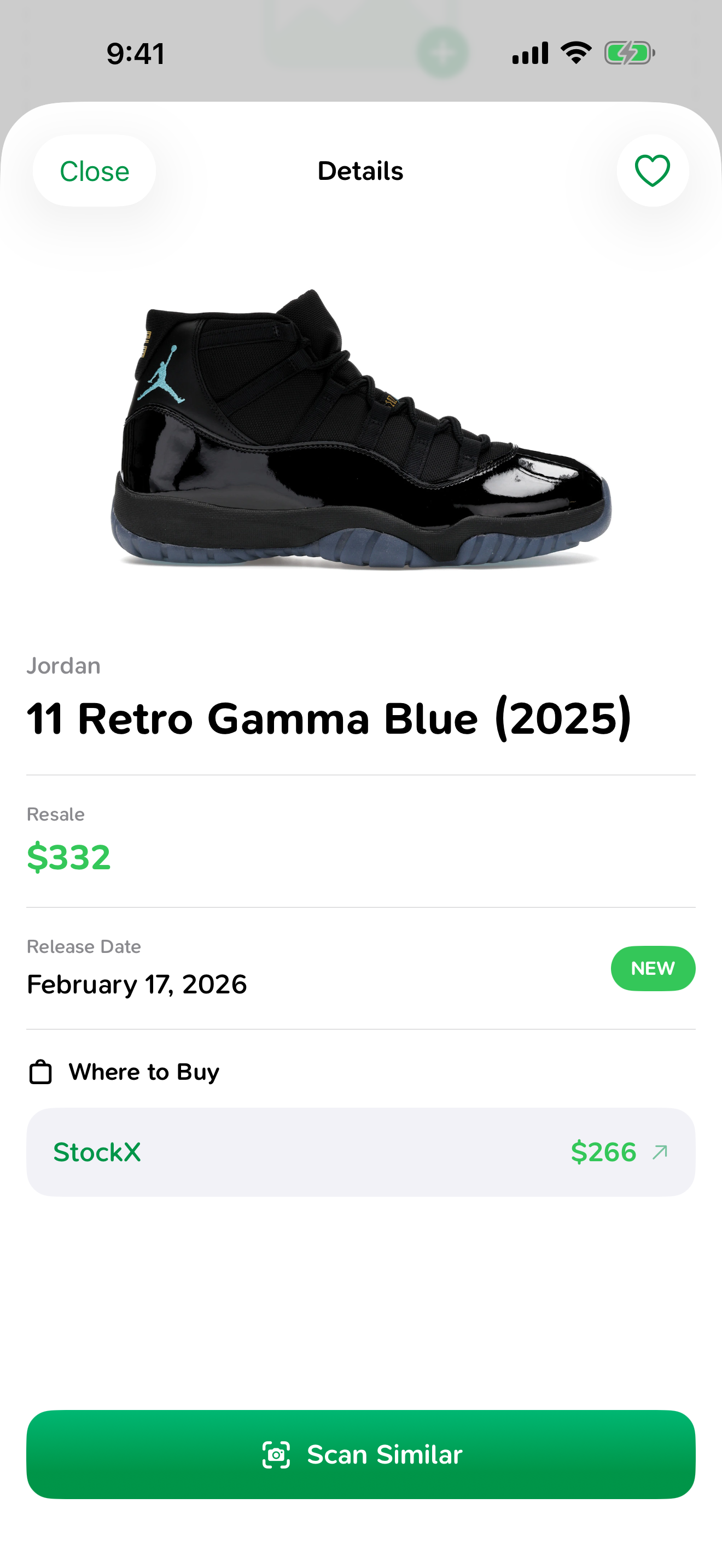
SneakerLens can place low, middle, and high estimates beside a suggested model so you have a starting point. That range still needs current evidence. Demand can change, and two pairs with the same product name can sell differently because of size, wear, accessories, location, or marketplace rules.
Review the SneakerLens feature evidence before applying this workflow to your own pair.
Identify the exact sneaker release
Start with the style code, model name, colorway, and release year. A broad label such as “green low-top” can mix several products with different supply and demand. Match the code on the size label to reference photos, then compare materials, panel placement, outsole, and included accessories.
If you begin with an image, use a photo-identification result as a lead and confirm it manually. Small edition changes, collaborations, and regional releases can materially affect price. Do not average evidence from another colorway simply because the silhouette is the same.
Account for size, condition, and accessories
Record the tagged size and whether the pair is new, tried on, lightly worn, or heavily worn. Note creasing, stains, heel drag, odor, separation, repairs, replaced laces, and missing insoles. Photograph flaws under neutral light rather than hiding them with filters or careful angles.
The original box, spare laces, tags, inserts, and special packaging can matter to a buyer. Their effect varies by model and venue, so compare like with like: a complete new pair is not valid evidence for a worn pair without its box.
Read low, middle, and high estimates
A range is more honest than a single number. The low end can represent weaker demand or a faster sale, the middle a typical reference point, and the high end an optimistic outcome under favorable conditions. None of those points promises that a buyer will appear.
Use SneakerLens's resale range to frame your research, then write down the date and assumptions behind it. A range without its model, size, condition, currency, and date quickly becomes misleading.
Compare listings with sold evidence
Active listings show what sellers ask, not what buyers paid. Review several comparable listings, but give more weight to recent completed sales when a marketplace makes them available. Filter for the same size, condition, region, and package completeness, and notice whether unusual outliers distort the picture.
Check when the evidence was recorded. A release announcement, restock, seasonal shift, or celebrity moment can move demand. Use more than one venue when possible because audiences, fees, currencies, and buyer protection differ.
Subtract seller fees and shipping
The buyer's price is not the seller's proceeds. Estimate marketplace commission, payment processing, shipping, insurance, packaging, promotions, and any taxes you personally paid as a direct cost. Read the venue's current fee schedule instead of relying on an old percentage from memory.
If you are deciding whether to sell, calculate the break-even price before accepting an offer. A headline sale price can look attractive while producing little or no gain after costs.
Record the estimate without treating it as guaranteed
Save the pair, purchase cost, condition, evidence date, estimated range, and selling assumptions together. Update the record when meaningful market evidence changes rather than changing it after every isolated listing.
Keep estimated value separate from realized proceeds. Until a sale closes and its costs are known, the number is an informed estimate—not cash and not profit. That distinction makes collection and resale records far more useful later.
Questions about this guide
Keep the evidence with the pair
Save identification, value, history, and collection details so you can review what changed and what still needs verification.
Open SneakerLens on the App Store