Practical guide
How to Track the Value of a Sneaker Collection
Catalog sneaker purchase costs, estimated values, condition, sold pairs, and gain or loss to understand a collection without confusing estimates with cash.
To track sneaker collection value, create one record for each exact pair, save its purchase cost and condition, attach a dated resale estimate, and keep sold proceeds separate from unsold value. That structure shows what you spent, what the collection may be worth, and what you actually realized.
A collection total is only as reliable as the records beneath it. Generic model names, forgotten fees, and new-condition estimates applied to worn pairs can make the number look precise while being wrong. SneakerLens helps keep scans, favorites, collection entries, gain or loss, and sold pairs together for regular review.
Review the SneakerLens feature evidence before applying this workflow to your own pair.
Catalog each exact pair
Record the model, colorway, style code, tagged size, and release information for each pair. Add clear photos and note whether the original box, spare laces, tags, or special accessories are present. Separate duplicate pairs by size and condition instead of combining them under one title.
Use photo identification or a barcode scan to start a record, then confirm the result against the label and physical shoe. A clean catalog makes later valuation faster because you can compare the same release rather than reconstructing its identity every time.
Record purchase cost, date, and condition
Enter the amount you paid, purchase date, currency, and direct acquisition costs you want included. Keep the receipt or marketplace record when available. If a pair was a gift or trade, note that clearly rather than assigning a fictional cash cost.
Describe condition consistently: new, tried on, or worn, followed by material details such as creasing, stains, heel drag, separation, odor, repairs, or missing parts. Update the condition after meaningful wear. A historical purchase record should remain unchanged while the current condition evolves.
Add a current estimated value
Identify comparable pairs in the same size and condition, review recent market evidence, and save a low-to-high range with its date. Use the midpoint only as a summary, not as a promise that every pair could sell at once for that amount.
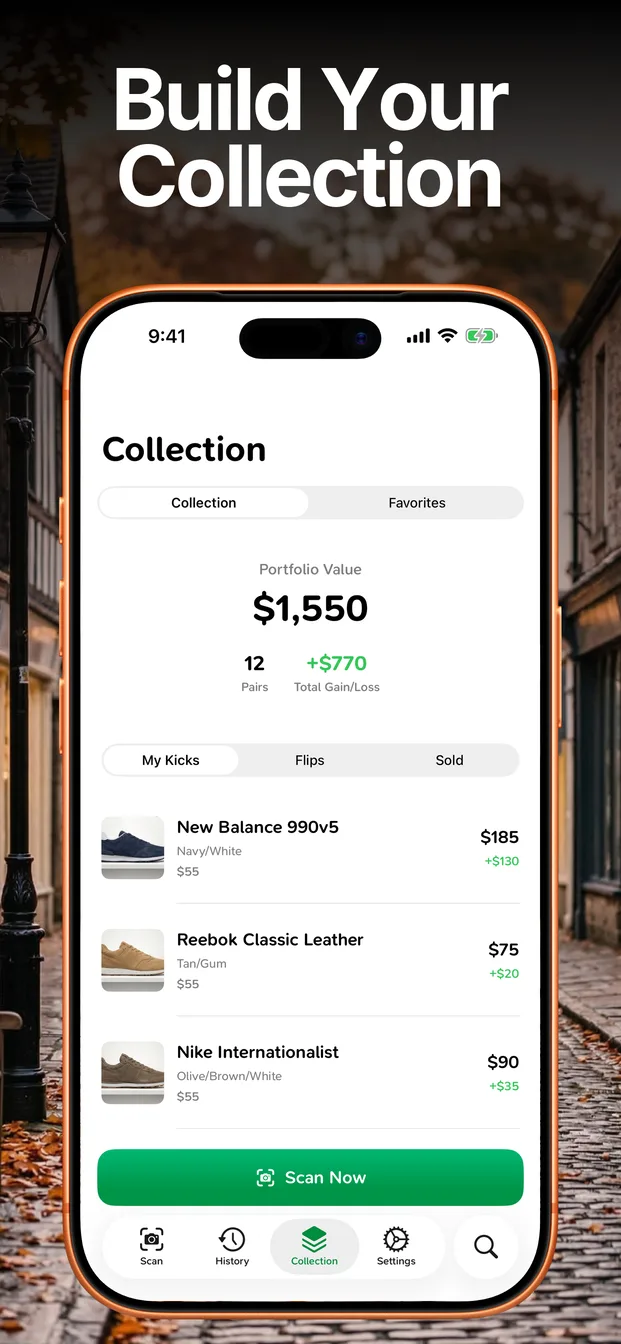
The SneakerLens collection view can show portfolio value and total gain or loss beside individual entries. Read those figures as estimates based on recorded inputs. Revisit a surprising number at the pair level before relying on the portfolio total.
Distinguish cost, estimated value, sale, and gain or loss
Purchase cost is what you paid. Estimated value is a dated market opinion. Sale proceeds are what the buyer paid. Realized gain or loss is what remains after subtracting purchase cost and direct selling expenses. Keeping these fields separate prevents unsold appreciation from appearing as cash profit.
For a sold pair, preserve the old estimate for history but enter the actual sale amount and costs. That record lets you compare an earlier expectation with the completed outcome and improve future assumptions.
Review material changes on a schedule
Choose a monthly or quarterly cadence if you actively monitor the collection, and review again before a sale, insurance discussion, trade, or other major decision. Focus on material changes such as restocks, sustained sold evidence, worsening condition, or a different level of market demand.
Avoid changing every entry because of one unusual listing. Record the sources and date behind an update so you can explain why the number moved. Consistent methods make trends more useful than frequent but uneven guesses.
Export and share a dated snapshot
Export a PDF snapshot when you need a readable collection summary for your own records or a conversation with someone else. Review it before sharing and remove information you do not want to disclose. A snapshot reflects the entries and estimates at that date, not a live appraisal.
Back up purchase evidence and important photos separately. The collection record helps organize the story of each pair, while original receipts and transaction records remain the stronger evidence for what you paid or received.
Questions about this guide
Keep the evidence with the pair
Save identification, value, history, and collection details so you can review what changed and what still needs verification.
Open SneakerLens on the App Store