Practical guide
How to Check Whether Sneakers May Be Fake
Use model details, labels, materials, provenance, and professional help to assess whether sneakers may be fake without relying on one signal.
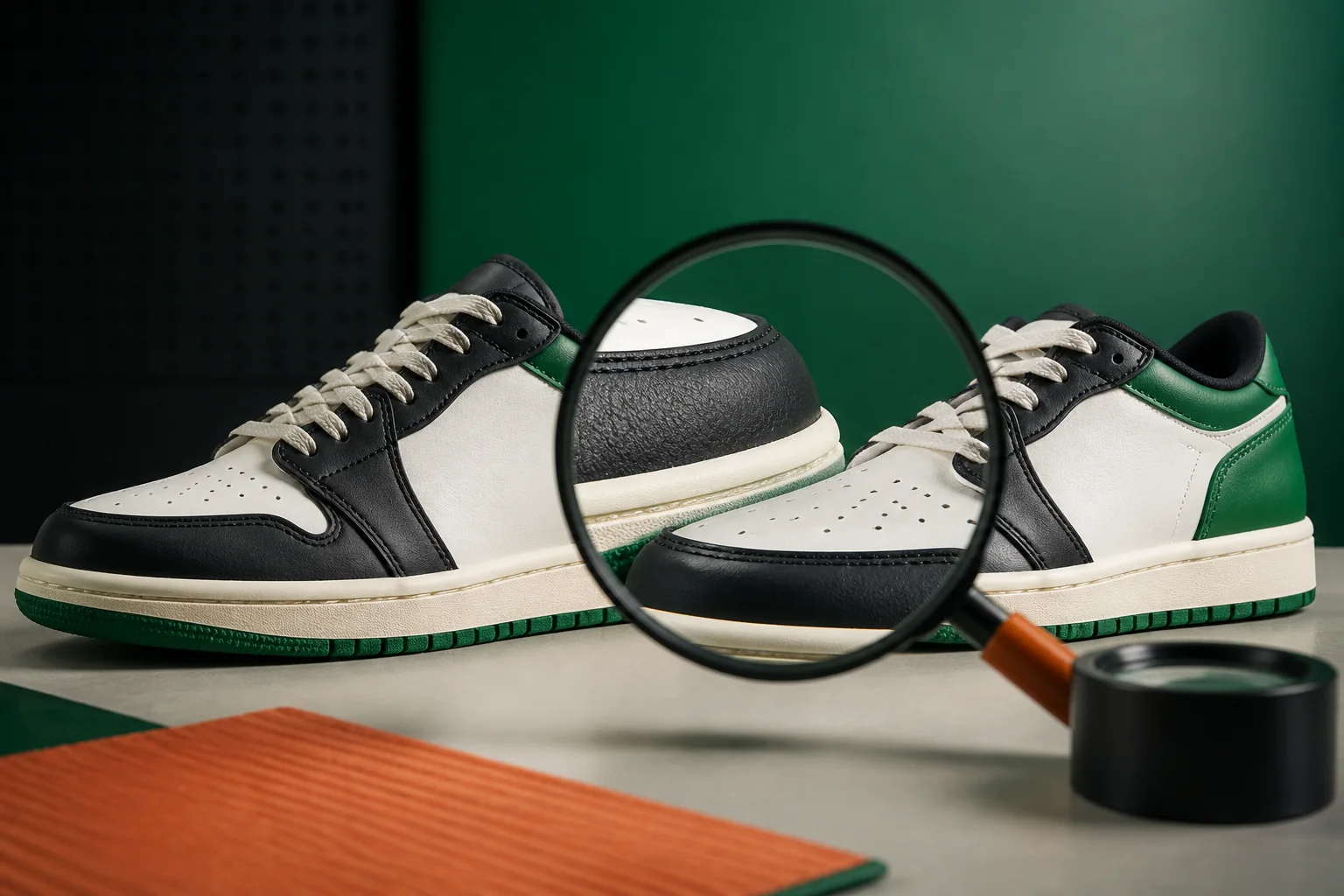
No photo app or matching barcode proves authenticity. To check whether sneakers may be fake, confirm the exact model, compare construction and labels with reliable references, evaluate the seller and provenance, and use an independent professional service when the financial risk is high.
The goal is to assemble several consistent pieces of evidence, not hunt for one magic sign. Authentic pairs can have small manufacturing differences, worn shoes can lose their original shape, and counterfeiters can copy labels or packaging. Record what agrees, what conflicts, and what you still cannot verify.
Review the SneakerLens feature evidence before applying this workflow to your own pair.
Establish the exact model and style code
Identify the model, colorway, release year, and regional version before comparing details. Read the style code from the shoe's size label and check whether it points to that same release. Compare both shoes in the pair; their size, production information, and construction should make sense together.
A photo identifier can help narrow the search, particularly when a seller provides only a generic title. Treat the suggestion as a research lead. Similar editions can share a silhouette while using different materials, tags, or outsole colors, so an exact reference is essential.
Inspect construction and materials
Compare the upper shape, panel proportions, stitching routes, perforations, eyelets, tongue, heel, insole, midsole, and outsole with trustworthy photographs of the same release. Look for consistency across the pair rather than declaring a verdict from one loose thread or glue mark.
Handle the materials when possible. Texture, thickness, flexibility, edge finishing, and odor may reveal a mismatch, but wear, storage, and factory variation can also change them. A suspicious detail becomes more meaningful when it appears alongside several other conflicts.
Compare labels and packaging
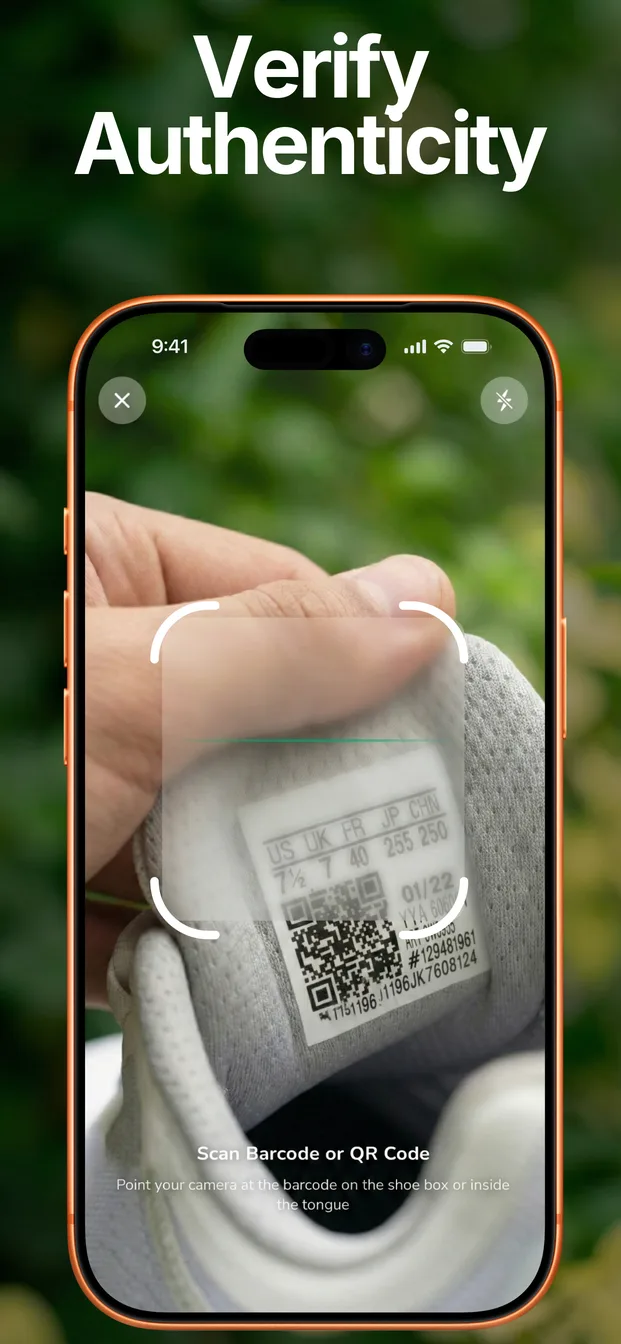
Check that the shoe label and box label agree on style code, size, color description, and other relevant fields. Compare the layout and print quality with a known reference, while remembering that codes, labels, receipts, and boxes can be copied or switched.
SneakerLens can scan a barcode or QR code and help you compare returned details. Use that as one input, not a pass or fail result. A readable, matching code does not establish where the shoe came from or whether every physical component is genuine.
Assess the seller, provenance, and return protection
Ask for current, high-resolution photos of the actual pair, including labels, outsole, heel, insoles, box, and any flaws. A seller who avoids specific requests, reuses unrelated images, pressures you to pay quickly, or insists on an unprotected payment method increases the risk.
Review the seller's history and the marketplace's dispute and return terms. A receipt can support provenance but may also be altered, so check whether its store, date, product, and transaction details are plausible. Keep messages and listing evidence until the transaction is resolved.
Use SneakerLens guidance as one input
Use identification details, confidence, label scanning, history, and saved results to organize your comparison. The app can help you ask better questions and notice mismatches; it cannot inspect hidden construction, verify a seller's story, or certify an item's chain of custody.
If the app's suggestion conflicts with the label or the shoe, pause. Improve the photos, confirm the style code through another reference, and document the disagreement rather than choosing whichever answer supports the purchase.
Escalate high-value uncertainty
For an expensive, rare, or disputed pair, consider an independent professional authentication service that evaluates the physical item under its own process. Review its scope, fees, limitations, and buyer protection before relying on it.
If important evidence remains unavailable, walking away can be the soundest decision. A checklist reduces uncertainty; it does not remove it. Price the remaining risk into your choice instead of treating missing proof as proof that everything is fine.
Questions about this guide
Keep the evidence with the pair
Save identification, value, history, and collection details so you can review what changed and what still needs verification.
Open SneakerLens on the App Store